There's a quiet war that's been fought in Maryland for decades, and it has nothing to do with politics. It's about crab seasoning. Tourists and outsiders reach for Old Bay. Many watermen, crab house owners, and people who've spent a real Maryland summer picking crabs reach for J.O.
This isn't just a preference. It's a culture. J.O. seasoning is the taste of a Maryland crab feast the way it's been done for generations — on back decks, at church fundraisers, in roadside crab houses with steam pouring out the doors. It's the seasoning your grandfather reached for, the one the lady running the steamers at the place your family has been going to for thirty years still uses today.
At T.L. Morris Seafood, we don't use Old Bay. We season every bushel with J.O., and not even the standard blend. We use our own custom blend, made for us by J.O. Spice. Here's why.
The Old Bay Problem
Old Bay was created in 1939 by Gustav Brunn, a Baltimore spice merchant who'd come to Maryland from Germany. It's a fine seasoning for some things. The problem is what happened to it over the decades. McCormick acquired Old Bay in 1990, mass-produced it, slapped it on potato chips and vodka, and marketed it to the entire country as the taste of Maryland. Somewhere along the way, people who'd never steamed a crab in their lives started dumping it on everything and calling it "authentic."
That's the issue real crab people have with Old Bay. It's not that it tastes bad. It's that it's loud. The official current ingredient label broadly lists celery salt, spices including red and black pepper, and paprika. Historical descriptions of Gustav Brunn's formula have included warm aromatic spices such as cinnamon, nutmeg, cloves, ginger, mace, and cardamom. That warmer, more complex flavor profile is part of what makes Old Bay unmistakable. In our opinion, though, it can also overwhelm the delicate sweetness of a good Chesapeake blue crab. Old Bay doesn't season a crab. It covers it up, which defeats the entire point of spending good money on good crabs.
Old Bay belongs on shrimp boils, on fries, on popcorn, maybe on a Bloody Mary rim. On a steamed Maryland blue crab, that's a tourist move. That's our opinion, and we'll stand on it.
Why J.O. Is the Real Crab Seasoning
J.O. Spice was founded in 1945 by J.O. (James Ozzle) Strigle and his wife Dot, with their first storefront in Baltimore City. J.O. was born and raised on Tangier Island, Virginia, an isolated Chesapeake Bay island with no road connection to the mainland, reached primarily by boat, where families have been working the water for over 250 years. He grew up crabbing, oystering, and eating the catch the way it was meant to be eaten.
That origin matters. Gustav Brunn was a talented Baltimore spice merchant who built a seasoning that conquered grocery store aisles. J.O. Strigle came from a Chesapeake waterman background. He understood crabs firsthand because he caught them, picked them, and ate them his whole life. The two men had different relationships to the crab industry, and you can taste it in what they made. While Old Bay became a national grocery-store icon, J.O. built its reputation inside the seafood trade, especially among crab houses and restaurants. You can still find them at jospices.com, still family-owned, still doing it the same way.
The J.O. Blends You Should Know
J.O. makes a wide range of seasonings, but three blends are especially relevant to this conversation. Knowing the difference tells you a lot about how seriously these people take crab seasoning.
J.O. No. 1 is the original all-purpose seafood seasoning, the one J.O. built the company on. It's the broader blend, good across a range of seafood.
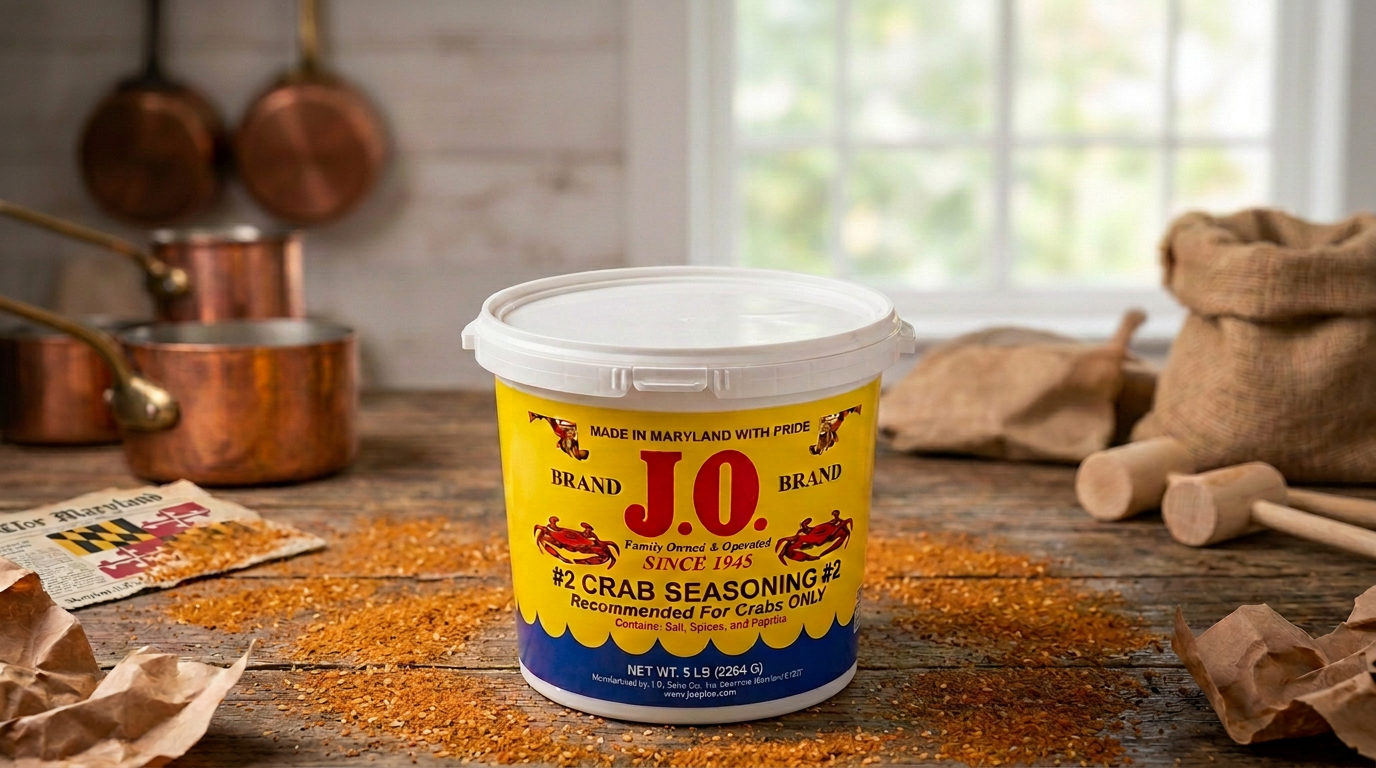
J.O. No. 2 is the Crab House Spice, formulated specifically for steamed crabs. This is the blend most Maryland crab houses reach for, and the one that built J.O.'s reputation on the Chesapeake.
J.O. No. 2 Extra Hot takes that same crab house profile and turns the heat up, for people who like their crabs to fight back a little.
Those are the three we're focusing on here, although J.O. makes several other crab and seafood blends as well. No gimmicks, no dessert-spice offshoots — just blends made for the people who actually steam crabs for a living.
What Makes J.O. No. 2 Work on a Crab
J.O. No. 2 is a proprietary spice-and-salt blend designed specifically for steamed crabs. J.O. doesn't publish the full formula, and we're not going to pretend to list every ingredient in it.
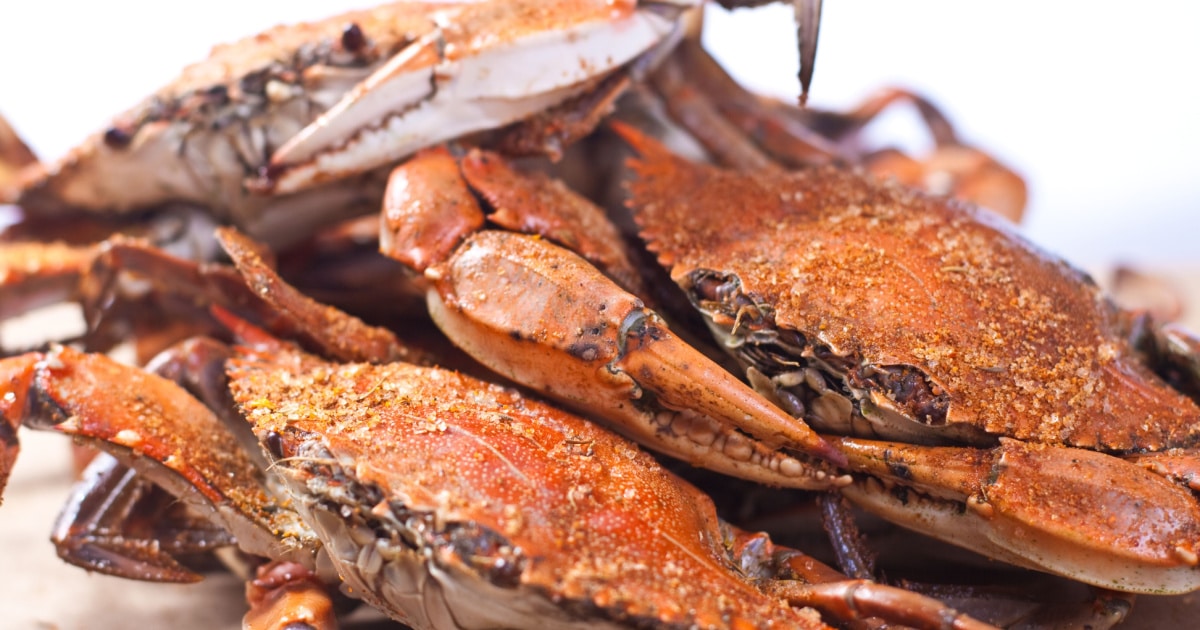
But here's one of the biggest differences: the salt. J.O. No. 2 uses a special flake-style salt designed to adhere to the crab during steaming, which helps the seasoning stay evenly distributed across the shell. When crabs come out of the pot, the seasoning needs to grab onto that shell and stay there, not slide off or dissolve into a wet paste. That cling is a big part of why J.O.-seasoned crabs look and eat the way they do: a deep, even dusting that seasons the crab without burying it.
The job of a crab seasoning is to make the crab's flavor pop, not to drown it out so you might as well be eating seasoned cardboard. J.O. lets the crab be the star. In our opinion, Old Bay makes the crab a delivery vehicle for spice.
Our Own Custom J.O. Blend
Here's where we go a step further. Most crab houses in Maryland use J.O. No. 2 straight out of the bag, and there's nothing wrong with that. It's a great blend. But at T.L. Morris Seafood, we don't use the standard No. 2. We use our own custom blend, produced for us by J.O. Spice themselves.
We're not going to invent details about the exact formula. That's between us and J.O. What we can tell you is that we worked with them to dial in a blend built around the way we season our crabs. It's still a J.O. product, made by the same family that's been seasoning Chesapeake crabs since 1945, but it's ours. You won't taste it anywhere else.
Maryland Knows
Walk into enough serious Maryland crab houses and you'll start noticing something: the seasoning on the crabs is very often J.O., not Old Bay. J.O. is widely used throughout Maryland's commercial crab-house culture. Many of the crab houses that steam crabs every day, for paying customers who know the difference, rely on J.O. That's not an accident. They chose it a long time ago.
For decades, J.O. was far more familiar inside crab houses than on national grocery-store shelves. Old Bay went to the grocery store aisle. J.O. stayed with the crab people.
How J.O. Became Maryland's Crab Culture
To understand why J.O. matters, you have to understand where Maryland crab culture comes from. It comes from the watermen — the people on the Bay before dawn, running trotlines and pulling traps, who built the crab houses that lined every creek and river town in Maryland. It comes from families who picked crabs around a table every summer because that's what you did, not because a magazine told you it was "authentic." And it comes from the steamers, the women and men who stood over the pots, pulling crabs out by the layer and hitting them with the right seasoning, doing it the way the house before them did it, going back generations.
J.O. came out of that world. J.O. Strigle was a waterman before he was a spice maker. When he built his seasoning, he built it the way a waterman would: lean, purposeful, no showing off. It spread through the seafood trade, from the wholesale market to crab houses and restaurants, because the people working with seafood liked what it did on the product. It caught on crab house by crab house, dock by dock, because the people using it could taste that it was made by someone who actually understood the crab.
That culture has a flavor, and the flavor is J.O. When you grow up in Maryland, you don't learn about crab seasoning from a spice tin. You learn it from the first time your uncle hands you a crab he just pulled out of the pot. You learn it from the smell coming off the steamer at the crab house your family has driven to every Saturday since you were in a car seat. You learn it, never said out loud, just known, that this is how it's done, this is what it's supposed to taste like, and this is what we use.
Old Bay is a brand. J.O. is a heritage. There's a reason so many long-running crab houses have relied on J.O. for decades. When something works, crab people aren't usually in a hurry to change it.
Taste Them Side by Side
If you doubt it, do the test yourself. Take two steamed crabs. Season one with J.O., one with Old Bay. Pick them back to back.
In our opinion, the J.O. crab tastes like a crab. The seasoning hits clean, the flavor brightens the meat, and when you're done you remember the crab. The Old Bay crab tastes like Old Bay. The warm spices sit heavy on the shell, and by the third claw you're tasting seasoning, not crab. For a lot of people that's exactly what they want, and that's fine. But for us, that's not what a Maryland steamed crab is supposed to taste like.
Some folks use J.O. on their crabs and keep Old Bay on the table for the corn and shrimp. That's a reasonable compromise: J.O. does the real work on the crabs, and Old Bay does what it's actually good at on the sides. But on the crabs themselves, it's J.O. only. That's the rule.
The Bottom Line
Old Bay may be Maryland's most famous seasoning. J.O. is the seasoning you'll find on the crabs at many of the places that actually steam them for a living.
We use J.O., our own custom blend, made for us by J.O. Spice, because it's what real crab people use, it's what lets the crab shine, and it's how it's been done in Maryland for more than eighty years. It's not a trend. It's not a marketing choice. It's the seasoning your grandfather reached for, the one the crab houses he drove to on Saturday mornings used, and the one that's still standing because nobody who's tasted the difference wants to switch. Once you try it, it's hard to go back.
Come Taste It Yourself
The best way to settle the debate is to taste it. Order a half-bushel of our J.O.-seasoned crabs — order online for pickup or call (410) 476-4811 — and see for yourself.